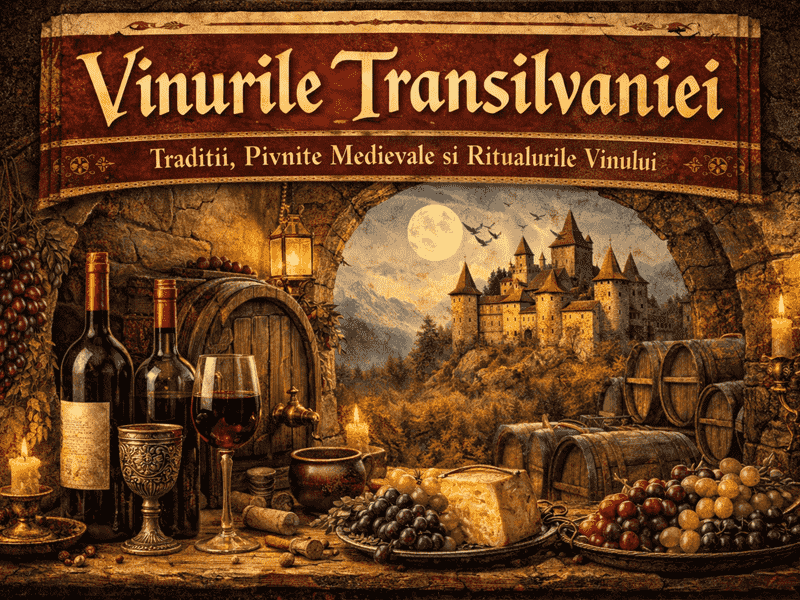
Wine has been a central part of Transylvanian traditions for centuries, being present in family rituals, holidays, religious ceremonies and important moments in the life of the communities. The medieval cellars of Saxon and Romanian villages still preserve traces of a rich wine culture, where dry or full barrels were considered symbols of luck, fertility and abundance. In many areas, wine production was a ritual involving the entire family, and each stage was respected with almost sacred attention.
What were the wine rituals in local traditions?
- Blessing the vineyard at the beginning of spring
- Sprinkling barrels with new wine for good luck
- The grape harvest, transformed into a community celebration
- Opening the new production during the holidays
What role did medieval cellars play?
- Places for natural wine maturation
- Shelter against temperature variations
- Social areas in Saxon communities
- Architectural elements with historical value
How did these traditions influence the culture of Transylvania?
- Creating a strong local identity
- Passing down customs from generation to generation
- Blending Romanian, Saxon and Hungarian cultures
- Birth of legends associated with wine and hospitality
Conclusion
Transylvanian wine traditions are an expression of the deep connection between man, nature and culture. They reflect the history of the region, contributing to its unique charm and reputation in the wine world. These customs continue to fascinate visitors and keep Transylvania's heritage alive.